You may experience mild to moderate discomfort for a few days, easily managed with prescribed pain medication.

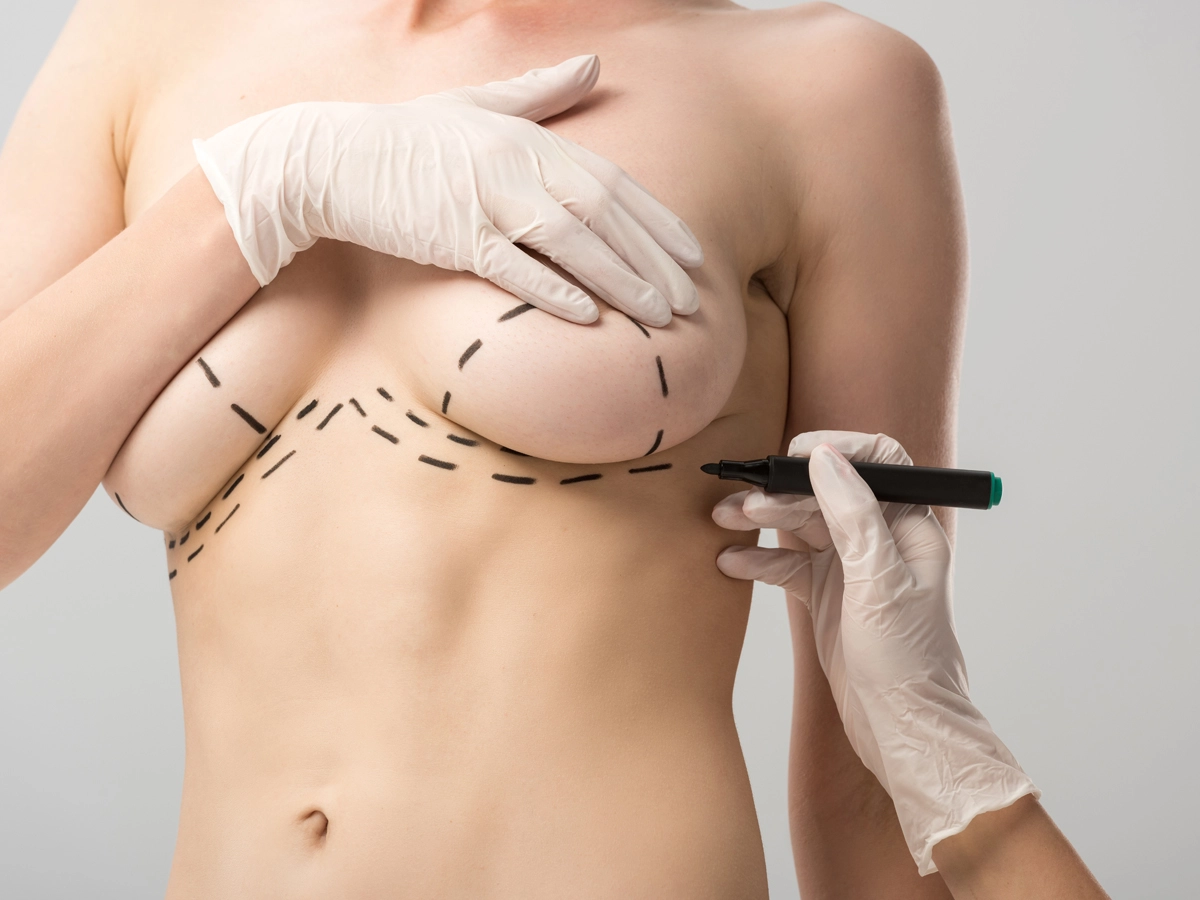
Breast reduction surgery (also called reduction mammoplasty) is a safe and effective procedure that removes excess breast tissue, fat, and skin to achieve a breast size that is proportionate to your body. This surgery not only enhances your body shape but also relieves neck pain, back pain, shoulder grooving, and skin irritation caused by overly large breasts.
At Rao Aesthetics, we specialise in natural-looking, well-proportioned results with a strong emphasis on patient comfort, safety, and long-term satisfaction.
You may consider female breast reduction if you experience:
• Persistent neck, back, or shoulder pain
• Bra strap marks or deep grooves on the shoulders
• Skin rashes or irritation under the breasts
• Difficulty exercising or finding clothes that fit comfortably
• Self-consciousness or low confidence due to breast size
Many women seek breast reduction in India to improve both physical comfort and confidence.
• Anesthesia: Performed under general anesthesia for your comfort.
• Incisions: Usually made around the areola and vertically down to the breast crease (sometimes with an additional horizontal incision).
Anchor Scar (Inverted-T Scar) in Breast Reduction
An anchor scar is the most common scar pattern used in breast reduction surgery when a significant amount of tissue and skin needs to be removed.
It has three parts:
1. Around the areola – a circular scar that blends with the natural color change between the areola and skin.
2. Vertical line – from the bottom of the areola straight down to the breast crease.
3. Horizontal line – along the natural breast crease.
Together, these form an inverted “T” shape. This method allows maximum reshaping and lifting of the breast, making it ideal for larger reductions.
A lollipop scar is a less extensive incision pattern used when only a moderate reduction or lift is needed.
It has two parts:
1. Around the areola – a circular scar around the edge of the areola.
2. Vertical line – from the bottom of the areola to the breast crease.
The lollipop technique avoids the horizontal crease scar, leading to less visible scarring while still allowing good reshaping for suitable candidates.
• Tissue Removal & Reshaping: Removes excess fat, glandular tissue, and skin while reshaping the breasts for improved proportion.
• Nipple & Areola Repositioning: The nipple and areola are lifted to a more natural, youthful position.
• Closure: Incisions are closed with dissolvable stitches and covered with surgical dressings.
Duration: The surgery usually takes 2–4 hours, depending on the amount of reduction needed.
• Hospital Stay: Most patients go home the same day or after a short overnight stay.
• Swelling & Bruising: Common in the first 1–2 weeks.
• Support Garment: A special post-surgery bra is worn for 4–6 weeks to aid healing and maintain shape.
• Work & Activities: Resume light activities within a week; avoid strenuous exercise for 4–6 weeks.
• Scars: Will fade over time but may not disappear completely.
With the right post-operative care, breast reduction recovery is smooth, and most women return to normal life quickly.
